



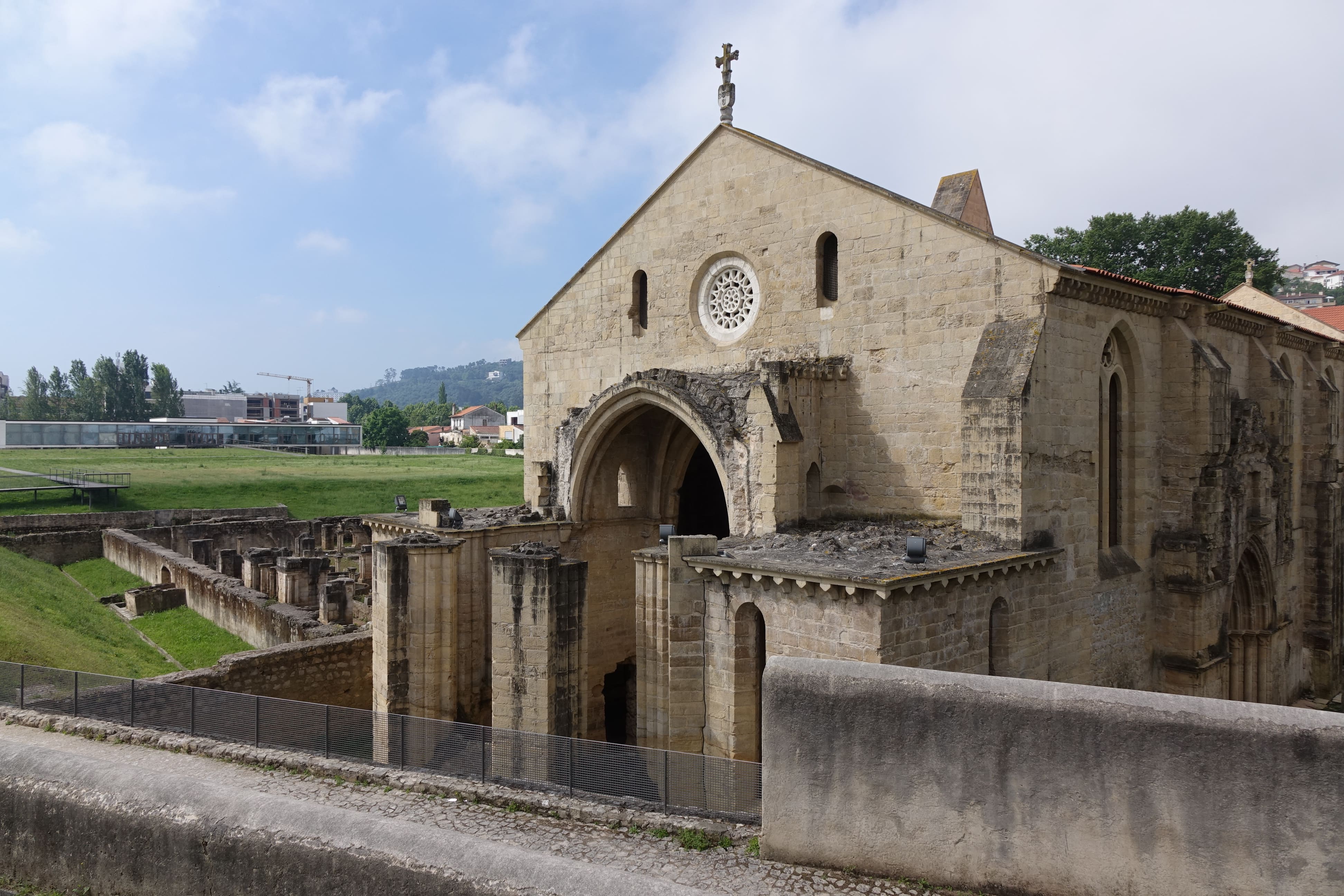

Convento de Santa Clara-a-Nova
Presentation
Classification: Monument|Place of Worship
This building dates back to the 17th century and was built to replace the Monastery of Santa Clara-a-Velha, which was repeatedly damaged by flooding from the Mondego River.
The life of the Poor Clares had become so unsustainable that King John IV decided to sponsor the construction of a new convent, built on high ground, safe from flooding. In 1696, the new monastery was completed and welcomed the Poor Clares, faithful custodians of the remains of Queen Saint Isabel, who is buried there.
The building is sober and utilitarian in style. In the church, dedicated to Queen Saint Isabel, a Baroque altarpiece was prepared to house the 17th-century silver and crystal urn for the veneration of the patron saint of the city of Coimbra. In front of the urn, on a pedestal, is the image of Queen Saint Isabel, a unique piece of mahogany, sculpted by Teixeira Lopes and offered to the Confraternity of Queen Saint Isabel by Queen Amélia.
The first tomb of the patron saint, made by Mestre Pero in 1330, is currently in the lower choir of the church; it is a unique and exemplary work of Gothic tomb art.
The cloister from 1733, by architect and engineer Carlos Mardel, already shows the transition to a new artistic language—classicism.
Read moreSchedule
Winter - Monday to Friday 9:00 a.m. – 6:45 p.m.
Sundays, Saturdays, and holidays: 9:00 a.m. – 6:00 p.m.
Particularities
The building has a baroque style but is sober and practical, adorned with small turrets. In the church, more precisely in the retable of the high altar, there is a urn made of silver and crystal from the 17th century where Santa Isabel remains are venerated. The previous tomb of the patron saint, made of stone and sculptured by Mestre Pêro in 1330 is in the lower choir of the church. The cloisters, dating from 1733, were designed by Carlos Mardel
Convento de Santa Clara-a-Nova
Igreja da Rainha Santa Isabel - Alto de Santa Clara
3040-270
Coimbra