



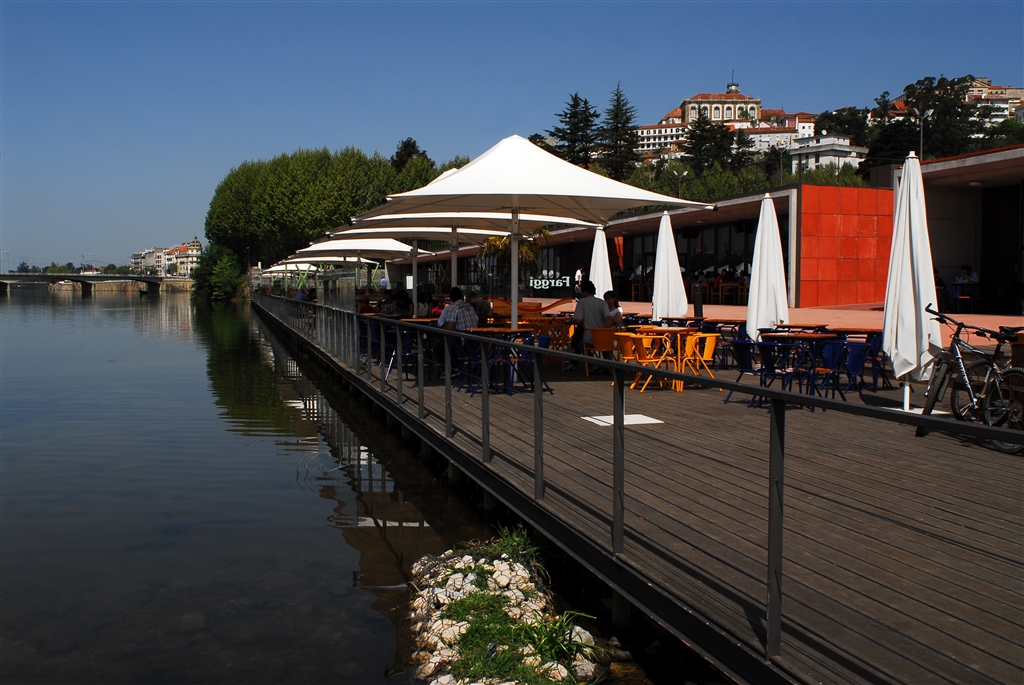
Mondego Green Park
Presentation
Category: Park|Garden|Leisure|Sports|Picnics
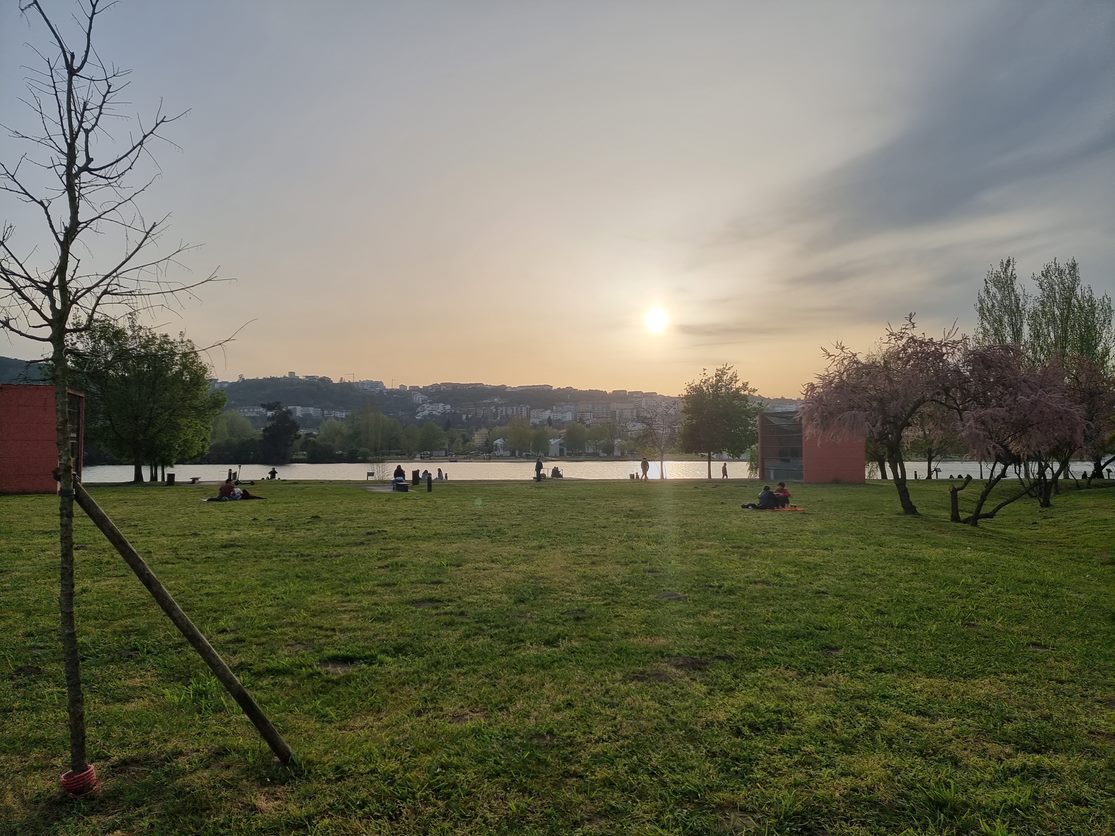
Designed by architect Camilo Cortesão as part of the Polis Program, Mondego Green Park was inaugurated on June 10, 2004. Stretching for around 4 km along the riverbank, it occupies an area of 400,000 m² on the right bank, entirely dedicated to leisure, with footpaths and cycle paths winding between pavilions hosting temporary exhibitions. One of the most notable of these is the Pavilhão Centro de Portugal, which represented Portugal at Expo 2000 in Hannover (Germany), and which was designed by architects Eduardo Souto Moura and Álvaro Siza Vieira.
During the summer of 2006, the magnificent and innovative “Pedro e Inês” pedestrian bridge was inaugurated, connecting the two banks of the Mondego, designed by architect Cecil Balmond and engineer António Adão da Fonseca.
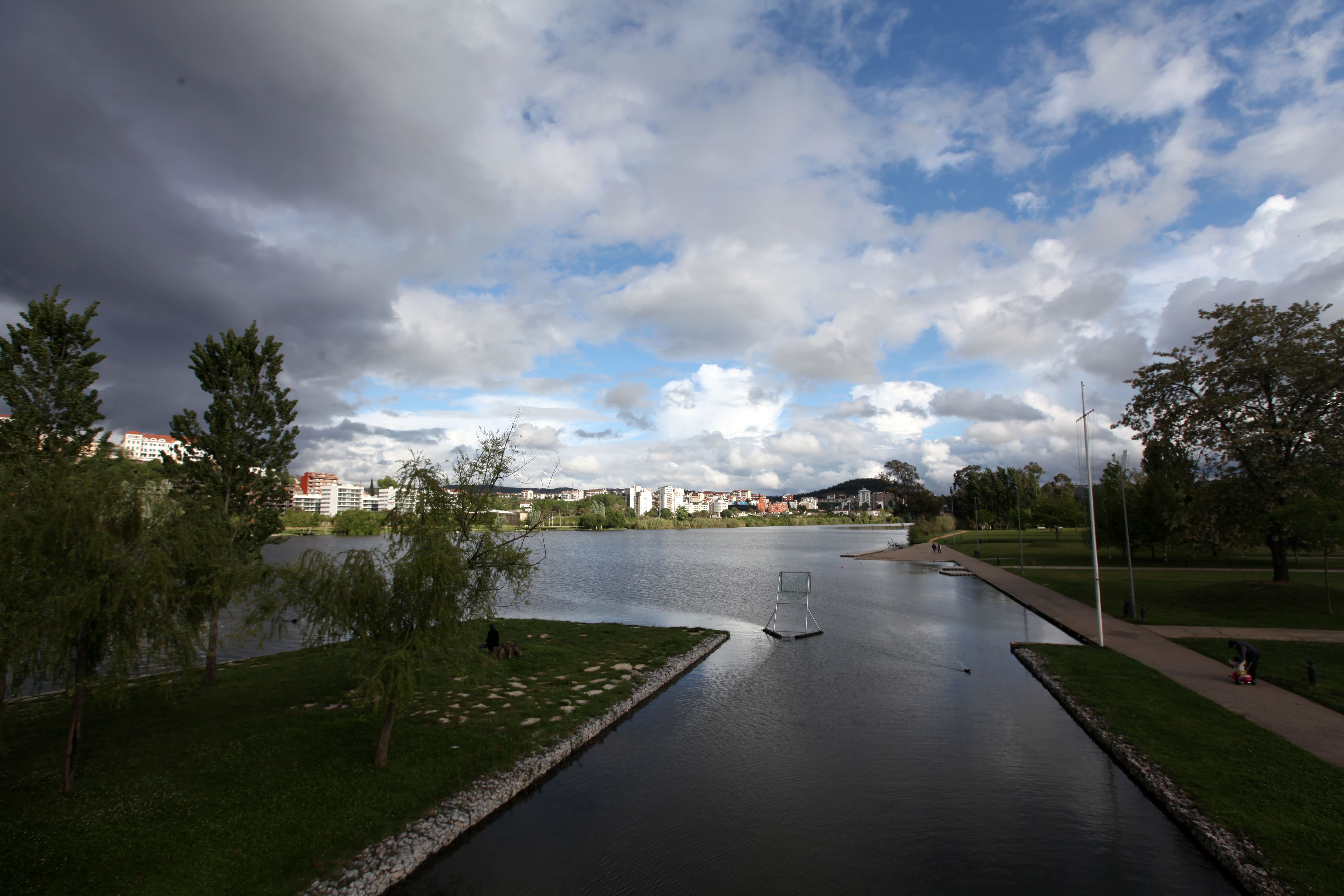
On the left bank, a sandpit was built for beach volleyball, a basic skatepark and various children's play equipment, a picnic area, and four pavilions, which house water sports clubs (canoeing, rowing, and sailing), thus ensuring many sports and leisure activities.
Extra Information
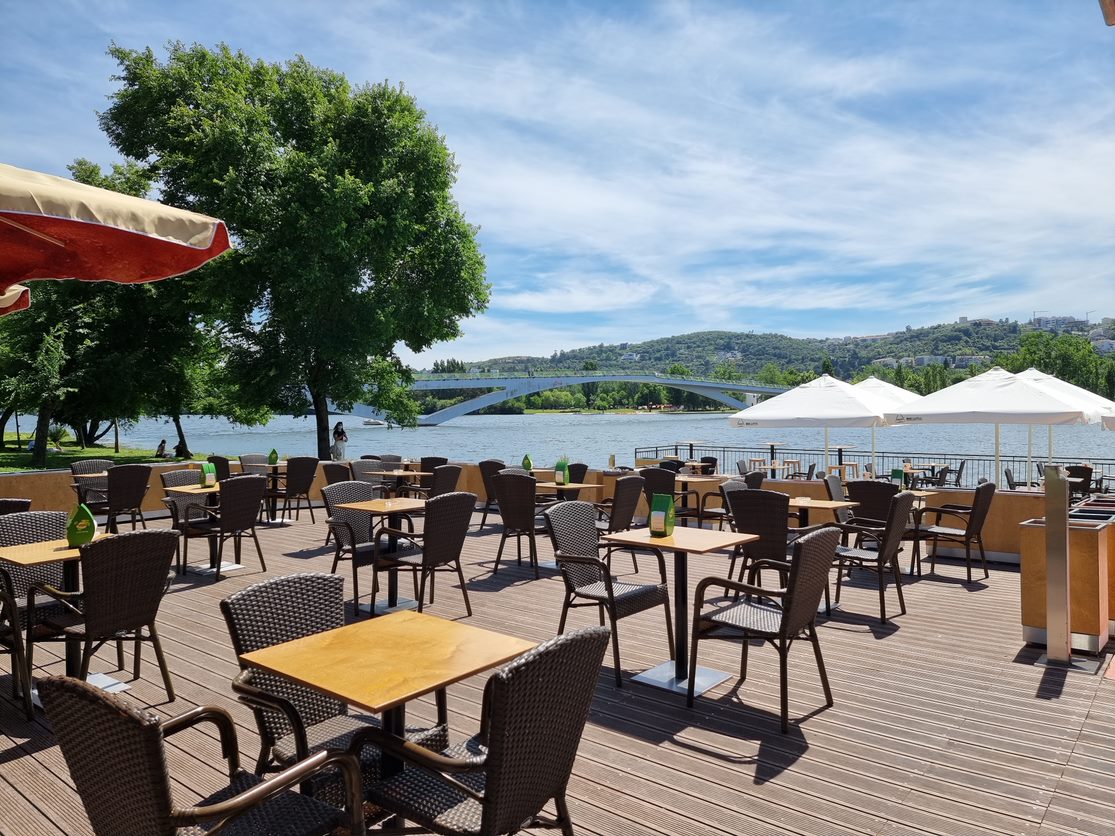
This is an immense green space where it is possible to find bars, restaurants, a children's playground, temporary exhibition pavilions and the Central Portugal Pavilion designed by Souto Moura and Álvaro Siza Vieira.
Connecting the left and right banks is the Pedro e Inês Pedestrian Bridge, designed by Adão Fonseca and Cecil Balmond, which was inaugurated on 26 November 2006. It is an antisymmetrical structure 275 metres long, which rises 10 metres above the water, with an 8-metre-wide square in the centre, designed as a place of pause and meditation.