



Church of São Bartolomeu
Presentation
Category: Monument|Place of Worship
The current church, built in the 18th century, was constructed on top of earlier churches from the 10th and 11th centuries.
Damaged later by Islamic invasions in the 12th century, it was rebuilt, as evidenced by the fragmented capital found in the church and currently on display at the Machado de Castro National Museum. Its layout would have been very similar, even in size, to the Church of Santiago, which still stands today at the opposite end of Praça do Comércio.
One of the doors of the old Romanesque church would have faced the current Adro de Cima da Igreja de São Bartolomeu, next to which the church's bell tower stood. The bell towers of the city's Romanesque churches were not usually attached to the temples themselves, as is customary today, but stood at some distance from them. Archaeological excavations carried out in this area have revealed that some of the houses facing the Adro de Cima occupy the position where the bell tower of the Romanesque church once stood.
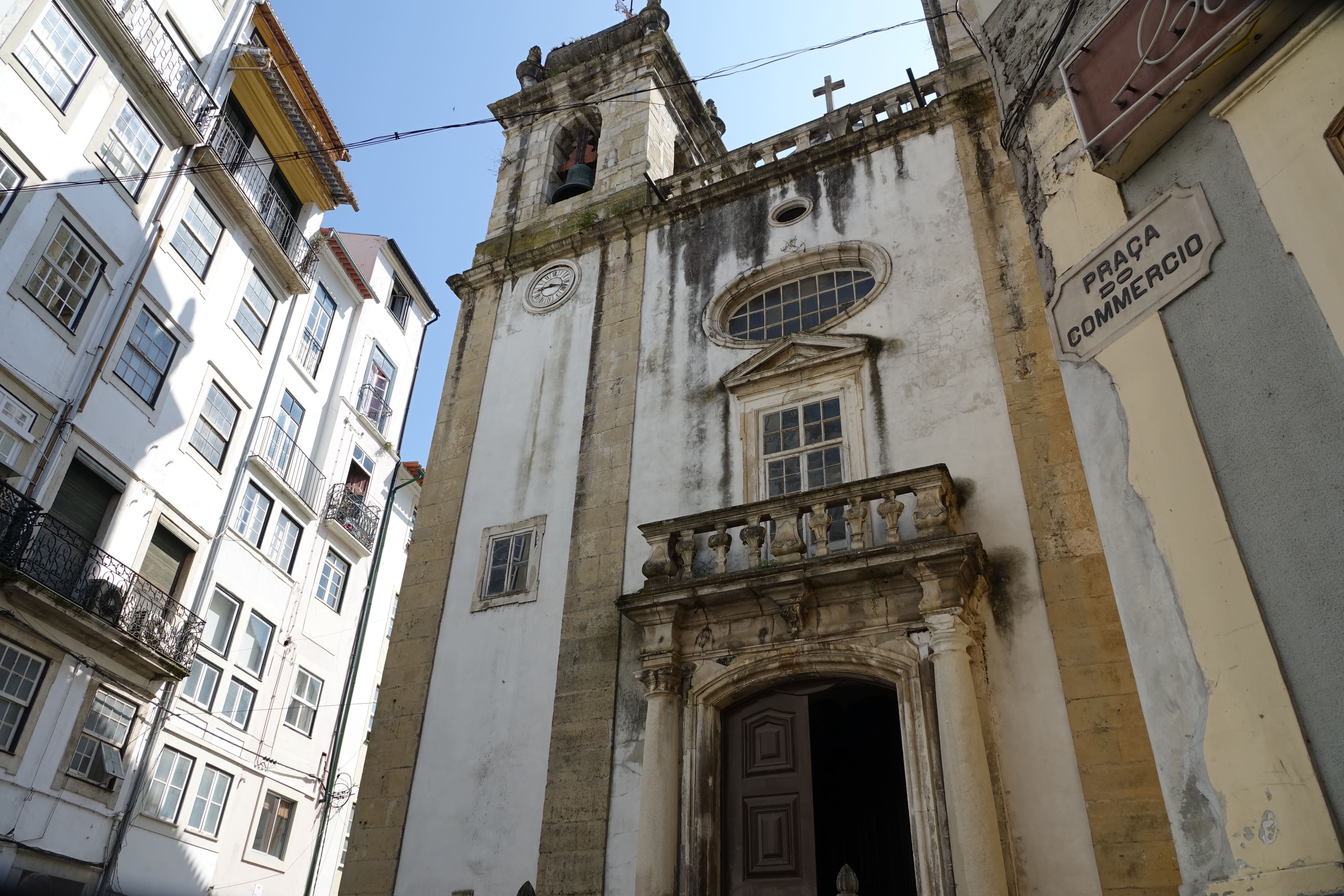
The 18th-century building was designed by architect Manuel Alves Macamboa, painter Pascoal Parente (author of the main altarpiece depicting the martyrdom of St. Bartholomew), and woodcarver João Ferreira Quaresma. The simplicity of its façade is complemented by two bell towers with carved spires and a portal with protruding columns, above which there is a window with a balustrade.
Read moreSchedule
10 a.m.- 5p.m.