



Monastery of Santa Maria de Celas
Presentation
Category: Monument
It was in 1221 that D. Sancha, daughter of King D. Sancho I, founded this convent, which at the time was located outside the city. Initially, it was just a church with a small cloister surrounded by small cells. The sisterhood consisted of no more than a dozen nuns, but over time, the monastery grew and became one of the most important in the country. With the extinction of religious orders in 1834, the monastery was dissolved, although the nuns were allowed to continue living there until the last of them died.
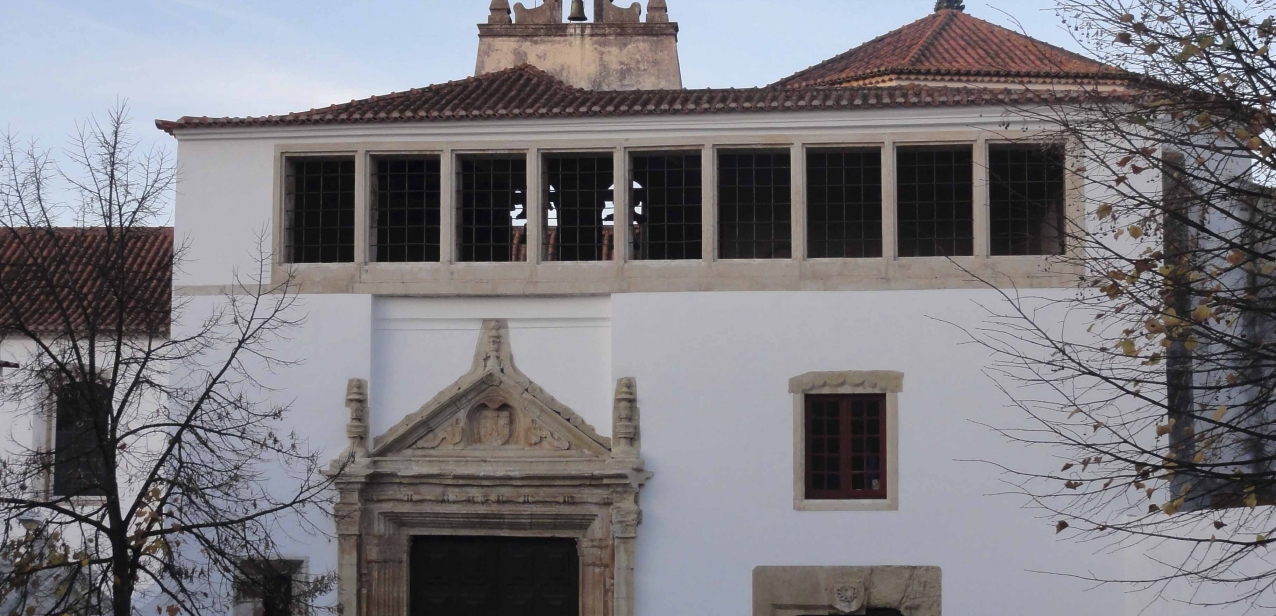
The current monastic complex dates from the 16th century. The façade features a noble 16th-century portal and, on the right-hand side, a smaller Manueline portal (the former gatehouse); on the upper floor is the 17th-century belvedere. On the right were the abbess's quarters, the kitchen, and the refectory; on the left was the guest quarters and the 17th-century convent registry office. This convent also had a “Roda dos Bolos” (Cake Wheel), used for exchanging goods, through which the nuns exchanged cakes and other sweets they made in the convent for other goods necessary for life in seclusion.
The cloister is considered one of the best examples of Gothic style in Portugal. Its historiated capitals, dating from the transition between the 13th and 14th centuries, are particularly noteworthy.
In the church, with its circular floor plan and Manueline-style vaulted ceiling, the keystone of the vault bearing the royal coat of arms is particularly noteworthy. The door from the choir to the antechamber of the chapter house bears the coats of arms of Abbess D. Leonor de Vasconcelos and D. Sancha, the work of sculptor Nicolau Chanteréne, dated 1526.
Read moreSchedule
3h00pm-6h00pm